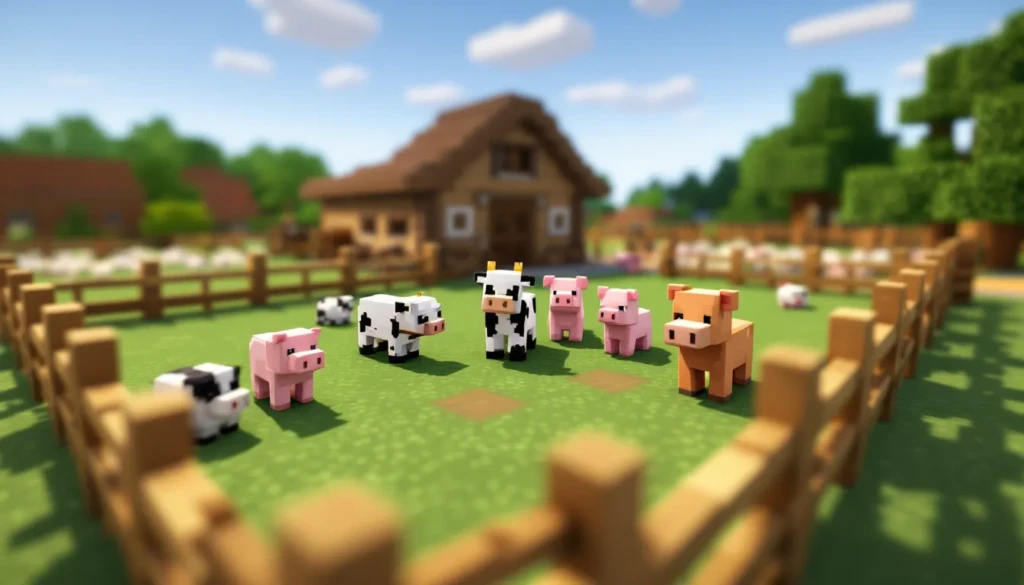
Minecraft animals aren’t just eye candy wandering the landscape, they’re the backbone of sustainable survival and progression. Whether you’re building your first farm or optimizing production for a mega-base, understanding how to locate, breed, tame, and manage different creatures can mean the difference between thriving and struggling for resources. This guide covers everything from passive mobs you’ll herd into pens to the exotic new mobs in Minecraft that have reshaped farming strategies in recent updates. By the end, you’ll know exactly how to handle every creature type the game throws at you, from sheep to the rarer finds lurking in biome corners.
Key Takeaways
- Minecraft animals are essential for sustainable survival and resource progression—passive mobs like sheep, cows, and chickens form the foundation of any successful farm.
- Breeding is the fastest way to generate resources; feed two adults the correct food (wheat for sheep, cows, and pigs; seeds for chickens; carrots for rabbits) to trigger love mode and produce offspring in about 20 minutes.
- Tamed creatures like wolves, cats, and llamas provide unique benefits—wolves become combat companions, cats prevent phantom attacks, and llamas serve as pack animals for resource transport during exploration.
- Rare animals in Minecraft such as axolotls, frogs, camels, and bees spawn in specific biomes (lush caves, swamps, deserts, and forests) and offer specialized advantages like underwater defense or instant healing through honey.
- Farm scale matters significantly; a 30×30 pen with 50+ sheep produces stacks of wool daily when sheared every few days, while larger automated setups with hoppers and redstone can run with minimal manual effort.
- Master animals in Minecraft by starting simple with a single sheep farm, then progressively adding cow and chicken pens to create a self-sustaining resource loop that supports late-game building projects.
Understanding Minecraft Mobs vs. Passive Animals
Not every creature in Minecraft behaves the same way. The term “mob” refers to any living entity, but breaking it down further makes management way simpler. Passive animals won’t attack you under any circumstance, sheep, cows, chickens, and similar creatures just wander around minding their business. These are your bread and butter for farming.
Neutral mobs are the middle ground. Creatures like wolves, llamas, and bees won’t aggress unless provoked, but that changes quickly if you hit them. Then there are hostile mobs, zombies, skeletons, and blazes, that spawn with the intent to kill.
For this guide, we’re focusing on the animals worth taming, breeding, and farming. Understanding mob mechanics saves you time and resources. A minecraft animal behaves predictably once you know whether it’s passive or neutral, what it eats, and how it reproduces. The new mobs in Minecraft introduced in recent versions have added complexity but also incredible opportunities for specialized farms that older versions couldn’t support.
Farm Animals and How to Breed Them
Breeding is the fastest way to generate resources and fill your farm with useful creatures. The mechanic is straightforward: feed two animals the right food, they’ll enter love mode, and a baby will pop out after a cooldown. Getting this system running pays dividends for hours.
Sheep, Cows, and Pigs: Basic Breeding Mechanics
These three are the farming foundation. Sheep eat grass and wheat. Find a grassy area, build a pen, and herd a few in using wheat. Feed two wheat to any two sheep, and they’ll breed. Baby sheep take about 20 minutes to mature into adults, and each adult drops 1-3 wool blocks when sheared. For a dedicated wool farm, a 20×20 pen with 100+ sheep can produce stacks of wool daily.
Cows need wheat and breed identically to sheep. Each adult cow drops leather and beef (raw or cooked) when killed. They’re slower to farm than chickens at scale, but leather is essential for armor and saddles. A small cow pen with 10-15 adults is usually enough for most players.
Pigs also eat wheat but are primarily farmed for pork drops. They breed just like cows and sheep. Early game, pigs are useful: late game, they’re less critical since you’ll have armor and better food sources.
All three breeding recipes are identical: find two adults, trap them in a small pen to prevent straying, and feed each one of them the required food (wheat). Watch for hearts above their heads, that’s the signal they’re breeding. The baby takes 20 minutes to mature unless you feed it wheat to speed it up.
Chickens and Rabbits: Unique Breeding Strategies
Chickens are weird but amazing. They eat seeds (any seeds work), and they breed the same way as other animals. What makes them special: they drop eggs regularly, even without breeding. Collect eggs and throw them, roughly 12.5% hatch into baby chickens. This means you can farm chickens without ever needing to manually breed them if you have a good egg collection system. For food, cooked chicken and eggs are excellent early game sustenance. A chicken farm with 200+ birds becomes virtually self-sustaining.
Rabbits eat carrots, dandelions, or golden carrots and breed with carrots. They’re trickier than other farm animals. Rabbits are faster and jump around constantly, making them harder to contain in standard pens. Build a pen with 5+ block-high walls to prevent escapes, or use trapdoors to funnel them into breeding areas. Rabbits drop raw rabbit and rabbit’s foot (useful for potion brewing). They’re not essential for survival but invaluable if you’re crafting healing potions.
For both, the breeding speed matches sheep and cows, but controlling them requires better infrastructure. Rabbits especially need tighter containment, or you’ll spend more time chasing escapees than farming.
Tamable Creatures and Loyalty Systems
Taming adds a whole layer to animal management. Unlike breeding, taming involves one-time interactions that give you a loyal companion. These creatures won’t breed but won’t wander off either.
Wolves: Training Loyal Companions
Wolves are tamed with bones. Collect bones from skeletal mobs or mine them in the form of bones dropped from skeletons, wither skeletons, and ancient structures. Right-click a wolf with a bone in hand, and it becomes a tamed wolf with a red collar (indicating loyalty). Tamed wolves follow you, sit when you crouch, and attack any hostile mob within range. They’re invaluable for exploring dangerous caves or fighting bosses.
The key to wolf management: feed them meat (raw or cooked) to heal them. A tamed wolf with full health is a devastating companion. In late-game setups, some players maintain an army of 20+ tamed wolves for organized mob grinding or boss fights. Wolves can be re-tamed infinitely, so grab extras early and keep them around base.
Cats, Parrots, and Llamas: Specialized Taming Approaches
Cats are tamed with raw fish. Find them in villages or spawn in forests at night. They’re cute companions that scare away phantoms when you sleep nearby and creepers when they’re nearby. A cat’s primary value is defensive, phantoms are annoying, and creepers can destroy your base. One well-placed cat in your bedroom or main base saves headaches.
Parrots need crackers (or raw seeds, depending on your version). They sit on your shoulder when tamed and mirror your sounds, making them flavor more than function. They don’t fight, but they do scare away ghasts. Purely cosmetic for most players, but collectible if you’re building a themed base.
Llamas are tamed with hay bales, lots of them. Right-click repeatedly until the taming animation triggers. Tamed llamas don’t follow you like wolves, but they can be equipped with carpets or chests (via right-click). Use them as pack animals to carry resources during long trips. They spit at hostile mobs, dealing decent damage. For survival mode, a few tamed llamas carrying supplies make exploring much more efficient.
Hostile Mobs and Dangerous Encounters
While this guide focuses on animals you’ll interact with peacefully, understanding hostile mobs prevents avoidable deaths.
Creatures to Avoid and Combat Tips
Hostile mobs spawn in darkness and deal varying damage. Zombies are slow and weak, easy kills with any weapon. Skeletons are deadlier because they deal ranged damage: use a shield or keep moving. Creepers are your nightmare, they explode silently and destroy terrain. Combat tip: charge them while sprinting to prevent them from detonating, or use a bow from distance.
Endermen teleport when you look at them directly (target them by hitting them without looking at their face). Spiders are fast but only dangerous in groups. Phantoms spawn if you don’t sleep for 3+ nights, always sleep in a bed to prevent them. Witches heal themselves constantly: focus on getting close to prevent potion use.
The meta for hostile mob defense remains consistent: build a well-lit base, sleep regularly, and carry a shield with a bow. Mob grinders are end-game solutions for farming hostile drops (ender pearls, gunpowder, etc.), but they require significant redstone knowledge. Early game, just avoid them at night and focus on building resources during the day.
Building Effective Animal Farms for Resources
A functional farm compounds resources over time. Scale matters, a 10×10 sheep pen and a 50×50 sheep pen produce wildly different outputs.
Farm Layout and Automation Techniques
The basic layout uses fences, gates, and trapdoors to contain animals and help harvesting. A simple sheep farm: build a 30×30 pen with a fence, leave one gate for entry/exit, and herd 50+ sheep inside. Shear them every few in-game days, and watch wool stack up.
Automation upgrades the game. Advanced players build systems using hoppers, minecarts, and redstone that automatically collect drops and funnel them to storage. These setups require redstone experience but save hours of manual grinding. Water channels can push animals into killing chambers (lava or fall damage), turning breeding farms into resource farms automatically.
For manual farming (most players), the key is pen design: tall walls to prevent escapes, a designated breeding area separate from the main pen, and nearby chests for storage. Don’t clutter the pen with unnecessary blocks, animals pathfind poorly around obstacles.
Collecting Drops and Maximizing Yield
Each animal drops specific resources. Sheep drop wool: kill them for wool blocks or shear for renewable wool. Cows drop leather and beef. Chickens drop eggs and meat. Pigs drop pork. Rabbits drop rabbit meat and rabbit’s feet (1/10 chance).
Maximizing yield means keeping populations high and harvest cycles consistent. A 100-sheep farm sheared every 3 days produces roughly 400+ wool blocks monthly, enough for tons of wool-based blocks and dyes. Similarly, a 50-cow farm provides steady leather for armor repairs and saddle crafting.
For resources like rabbit’s feet (needed for resistance potions), you need higher rabbit counts because the drop rate is low. Plan your farm size around your resource goals. Casual players might maintain 20 sheep and 10 cows: competitive players optimize for specific bottlenecks.
Rare Animals and Where to Find Them
Some minecraft animals don’t spawn naturally everywhere or require specific conditions. The new mobs in Minecraft, especially in recent updates like 1.20+, have introduced variants and rare spawns that demand exploration.
Axolotls spawn in lush caves and are ridiculously useful. Tame them with tropical fish in a bucket and place them in water near your base. They hunt fish and squid while you swim, dealing damage to hostile mobs underwater. In lush caves, watch for different colors, each color is functionally identical, but collectors love the variety.
Bees spawn naturally in forest biomes but are easier to find in flowering forests. They’re technically tamable (they follow flowers placed on your cursor) and produce honey and honeycomb. A bee farm isn’t essential but provides infinite honey for instant healing and breeding more bees.
Frogs were added in recent versions and spawn in swamps and mangrove swamps. They don’t breed through food like normal animals but through tadpole mechanics. Frogs eat small slimes and spiders, making them useful for pest control. Different biome variants exist, desert, snow, and tropical frogs each have distinct appearances.
Camels spawn in desert villages and deserts. They’re massive creatures you can saddle and ride with a partner. Riding a camel grants height advantage and immunity to suffocation. They’re rare finds but incredible for exploration and traversing deserts quickly.
Finding rare animals demands exploration. Biome-specific creatures are locked to their spawns, lush caves for axolotls, deserts for camels, swamps for frogs. Twinfinite and Game8 have detailed biome guides showing exact spawn conditions and coordinates for rare mobs if you’re struggling to locate them. Community-driven platforms like Nexus Mods often feature datamined location data and spawn trackers for the latest mobs, though vanilla survival is more rewarding without them.
Conclusion
Mastering Minecraft animals transforms your gameplay from hand-to-mouth survival into sustainable farming and resource abundance. Start simple, fence up a few sheep, breed them, and harvest wool. Once that’s running smoothly, add a cow pen, then a chicken farm. Each addition compounds, and before long, you’re drowning in resources.
The creatures you choose to farm depend on your goals. Need food? Chickens and cows scale efficiently. Want combat companions? Invest in wolves. Building mega-projects requiring massive wool quantities? Dedicate space to sheep. Rare animals and new mobs in recent updates add depth for players ready to explore challenging biomes.
Remember: animals are more than decorations, they’re your path to late-game progression. Keep them organized, fed, and breeding, and they’ll reward you with the resources needed to build anything you imagine.