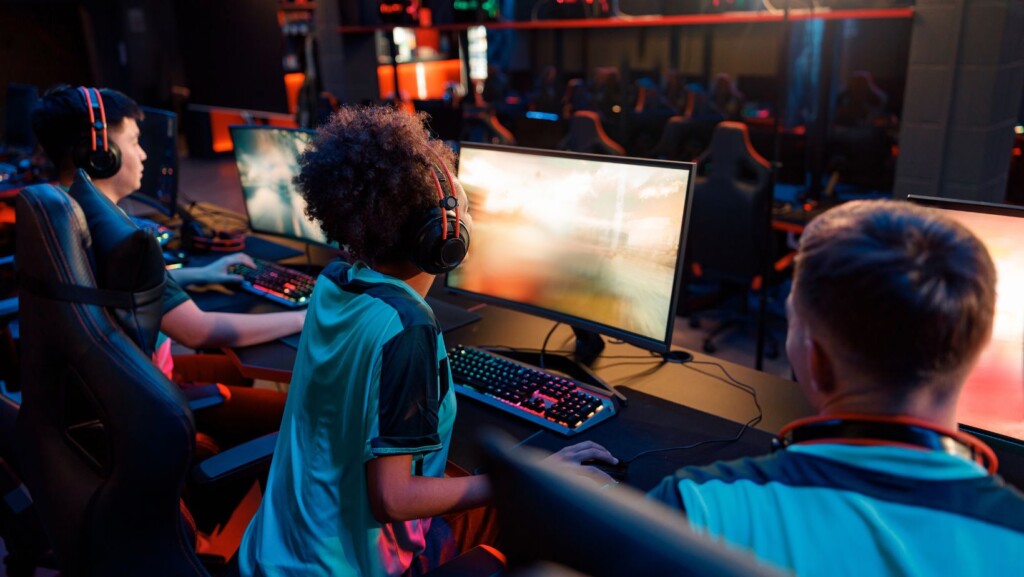
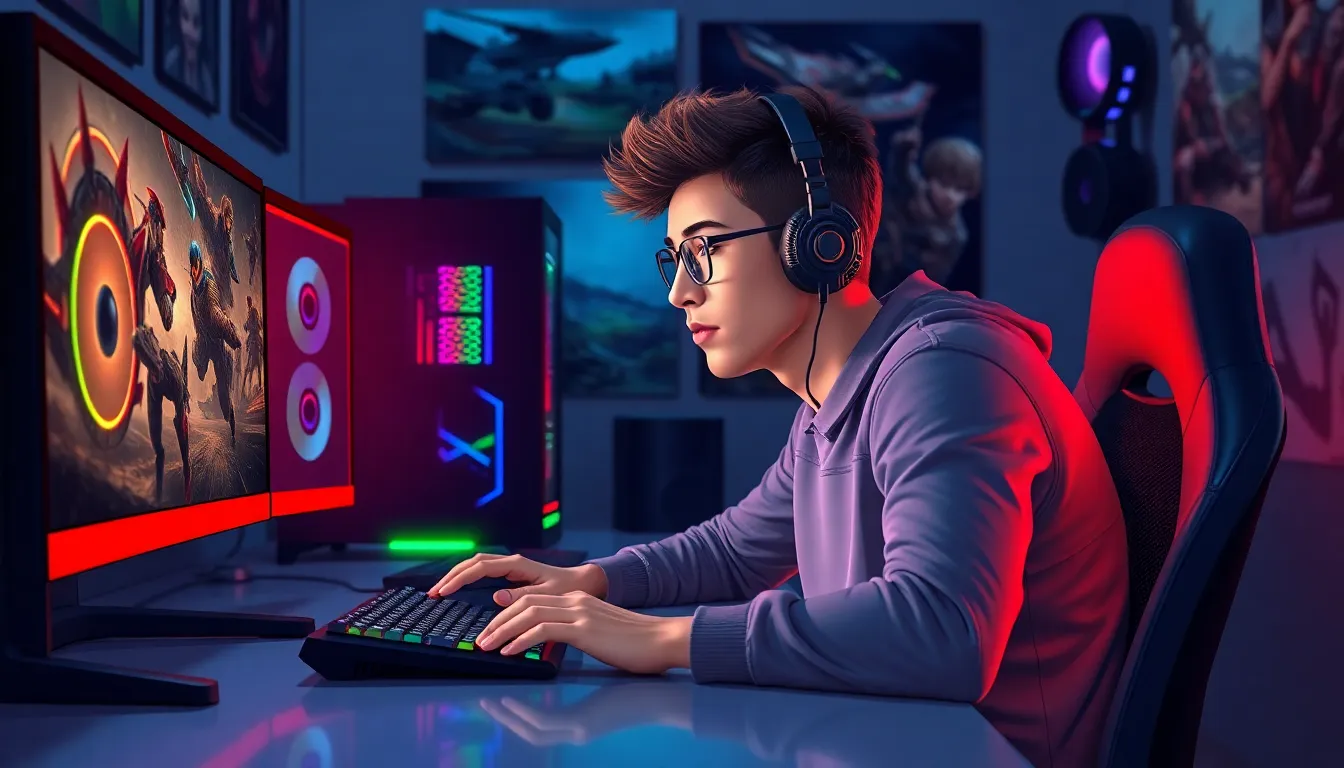
In a world where gaming has evolved into a thrilling, immersive experience, having the right gaming computer can mean the difference between epic victories and frustrating defeats. Picture this: you’re in the middle of an intense battle, your heart racing, and your computer decides to lag. Talk about a buzzkill! Investing in a top-notch gaming rig isn’t just a luxury; it’s a game-changer.
Gaming Computer
A gaming computer is a specialized computer built to provide high performance in gaming tasks. It features powerful components to handle demanding graphics and processing requirements. High-end graphics cards render images smoothly, ensuring an immersive experience.
Processors in gaming computers, often multi-core, deliver faster computations for better gameplay. Memory capacity also plays a crucial role. Typically, gaming setups utilize 16GB or more of RAM to enable seamless multitasking and efficient performance during intense gaming sessions.
Storage solutions vary, with many gamers opting for Solid State Drives (SSDs) due to their speed and responsiveness. Traditional Hard Disk Drives (HDDs) may still be used for additional storage. Many gaming computers come pre-built, but custom builds allow for greater personalization of components.
Cooling systems are essential to prevent overheating, which can lead to performance drops. Effective cooling solutions include liquid cooling and high-airflow cases. Audio quality matters as well; gaming computers often feature sound cards or integrated audio systems for a more immersive auditory experience.
Accessibility of gaming peripherals complements the gaming computer. Keyboards, mice, and headsets designed for gaming enhance the overall setup. Competitive gamers especially benefit from equipment tailored for responsiveness and precision.
Defining a gaming computer involves understanding its unique components and functionalities that cater specifically to gamers’ needs, ensuring they enjoy optimal performance and an engaging gaming environment.
Key Components of Gaming Computers
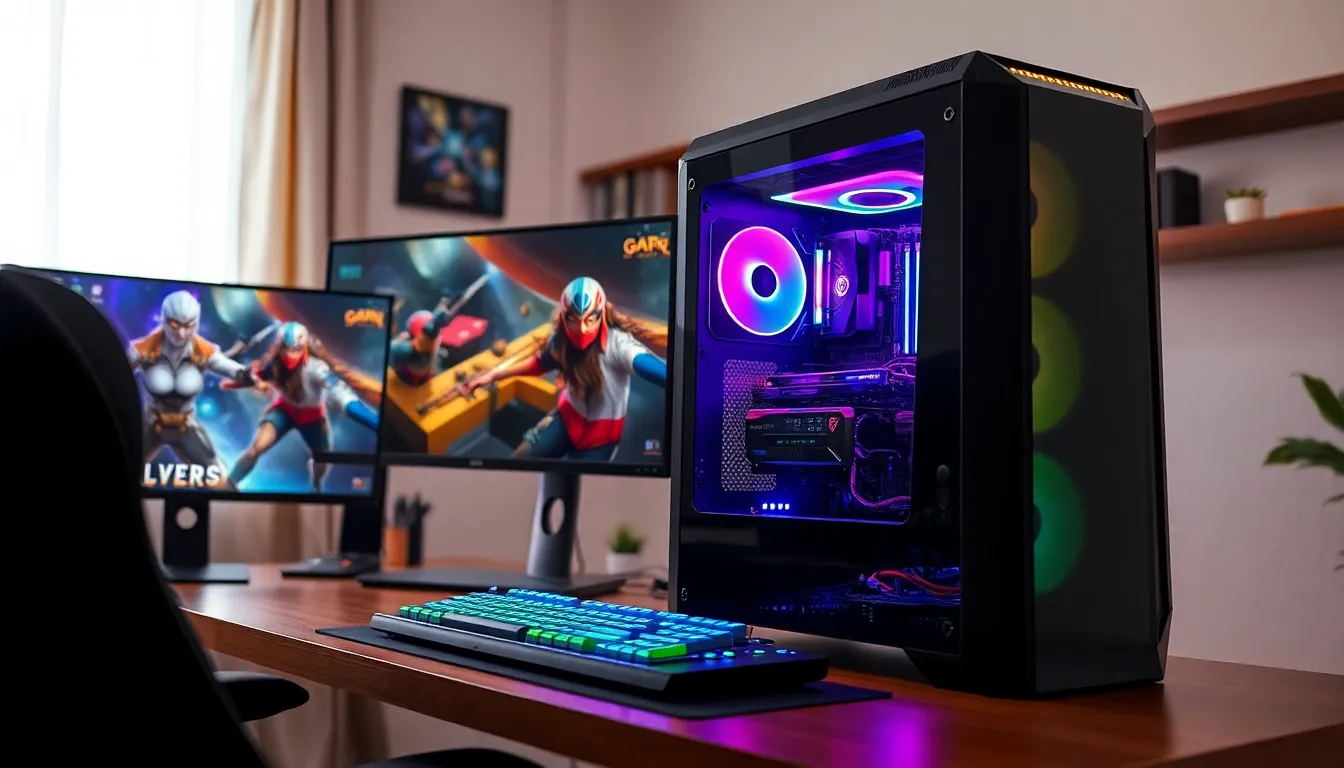
Understanding the key components of gaming computers is vital for creating a high-performance gaming rig. Each part plays a critical role in delivering an immersive gaming experience.
CPU
The CPU, or central processing unit, serves as the brain of the gaming computer. A multi-core processor, such as the Intel Core i7 or AMD Ryzen 7, enhances processing speed and multitasking capabilities. Modern games demand significant computational power; therefore, high clock speeds and multiple cores ensure tasks run smoothly. Gamers benefit from faster loading times and reduced lag during gameplay. Selecting a robust CPU directly contributes to overall system performance, making it a priority in building a gaming rig.
GPU
The GPU, or graphics processing unit, is essential for rendering high-quality graphics. High-performance graphics cards, like NVIDIA GeForce RTX 3070 or AMD Radeon RX 6800, allow for smoother frame rates and improved visual fidelity. Gamers experience enhanced gameplay with advanced features such as ray tracing and high dynamic range. A strong GPU not only elevates graphical performance but also impacts the overall gaming experience. Investing in a powerful GPU enables players to enjoy the latest titles at optimal settings.
RAM
RAM, or random access memory, supports multitasking and system performance. A minimum of 16GB RAM is recommended for gaming computers to handle modern games efficiently. Fast memory speeds and dual-channel configurations boost performance further. This increase allows for smoother transitions between applications and less stuttering during gameplay. Gamers require ample RAM to ensure seamless performance across all activities, from gaming to streaming.
Storage
Storage choices greatly influence loading times and overall system responsiveness. Utilizing Solid State Drives (SSDs) significantly reduces boot and load times compared to traditional Hard Disk Drives (HDDs). Games benefit from SSDs’ faster read and write speeds, enabling quick access to in-game assets. A combination of SSD for operating systems and larger HDD for game storage creates an optimized setup. Choosing the right storage solutions enhances the gaming experience by minimizing wait times and improving system efficiency.
Types of Gaming Computers
Understanding the diverse types of gaming computers aids in making informed decisions tailored to gaming needs. Two primary categories stand out: pre-built gaming computers and custom-built gaming computers.
Pre-built Gaming Computers
Pre-built gaming computers offer convenience and immediate usability for gamers. These systems come assembled and rigorously tested, ensuring optimal performance right out of the box. Popular brands like Dell, HP, and ASUS provide a range of options catering to various budgets and gaming preferences. Models often feature a balance of powerful CPUs, GPUs, and ample RAM, making them suitable for most modern games. Warranty and customer support enhance their appeal, as gamers can rely on professional assistance if problems arise. Overall, pre-built computers streamline the gaming setup experience, eliminating the complexities of component selection.
Custom-built Gaming Computers
Custom-built gaming computers allow gamers to tailor their setups precisely to their preferences. Gamers choose each component, from processors to graphics cards, ensuring compatibility and performance. This flexibility leads to optimized gaming experiences, as enthusiasts prioritize features based on the games they play. Building a custom PC can also offer cost savings compared to high-end pre-built options, especially when selecting components on sale. Assembly skills grow through the process, empowering gamers with knowledge about their systems. Overall, custom builds provide a unique level of personalization and satisfaction that caters directly to individual gaming requirements.
Performance Considerations
Performance plays a crucial role in gaming computers. It affects gameplay quality, responsiveness, and overall enjoyment. Key factors include frame rates, resolution, and cooling solutions.
Frame Rates
Frame rates determine how smoothly games run. Commonly measured in frames per second (FPS), higher rates yield better performance. Competitive gamers often target 60 FPS or higher, ensuring fluid motion and quick reactions. Graphics cards influence frame rates greatly. For instance, NVIDIA GeForce RTX 3070 excels at high FPS even within visually demanding games. Understanding frame rates helps gamers select components that align with their preferences, ensuring optimal performance during intense gaming sessions.
Resolution
Resolution impacts visual clarity and detail. Measured in pixels, common resolutions include 1080p, 1440p, and 4K. Higher resolutions provide sharper images but demand more from hardware. Gaming computers equipped with powerful GPUs effectively manage higher resolutions. For example, a 1440p resolution enhances visuals significantly while maintaining performance levels. Gamers should balance resolution preferences with their hardware capabilities to achieve the best possible experience.
Cooling Solutions
Effective cooling solutions are vital for maintaining performance stability. Overheating can lead to throttling, reducing the hardware’s efficiency. Many gaming computers utilize air and liquid cooling systems to manage heat. High-performance CPUs and GPUs benefit from advanced cooling techniques. For instance, liquid cooling provides superior temperature management compared to air cooling. Selecting appropriate cooling solutions prevents overheating during prolonged gaming sessions, ensuring consistent performance and longevity of components.
Conclusion
Investing in a high-quality gaming computer is crucial for anyone serious about gaming. The right components can elevate the gaming experience by ensuring smooth performance and stunning visuals. Whether choosing a pre-built system for convenience or opting for a custom build for personalization, understanding the key features can make all the difference.
With powerful CPUs and GPUs paired with ample RAM and fast storage solutions, gamers can achieve the performance they desire. Additionally, effective cooling systems and quality peripherals enhance gameplay, making it more enjoyable and competitive. A well-equipped gaming computer not only meets the demands of modern games but also provides a platform for gamers to fully immerse themselves in their favorite virtual worlds.